
No products in the cart.
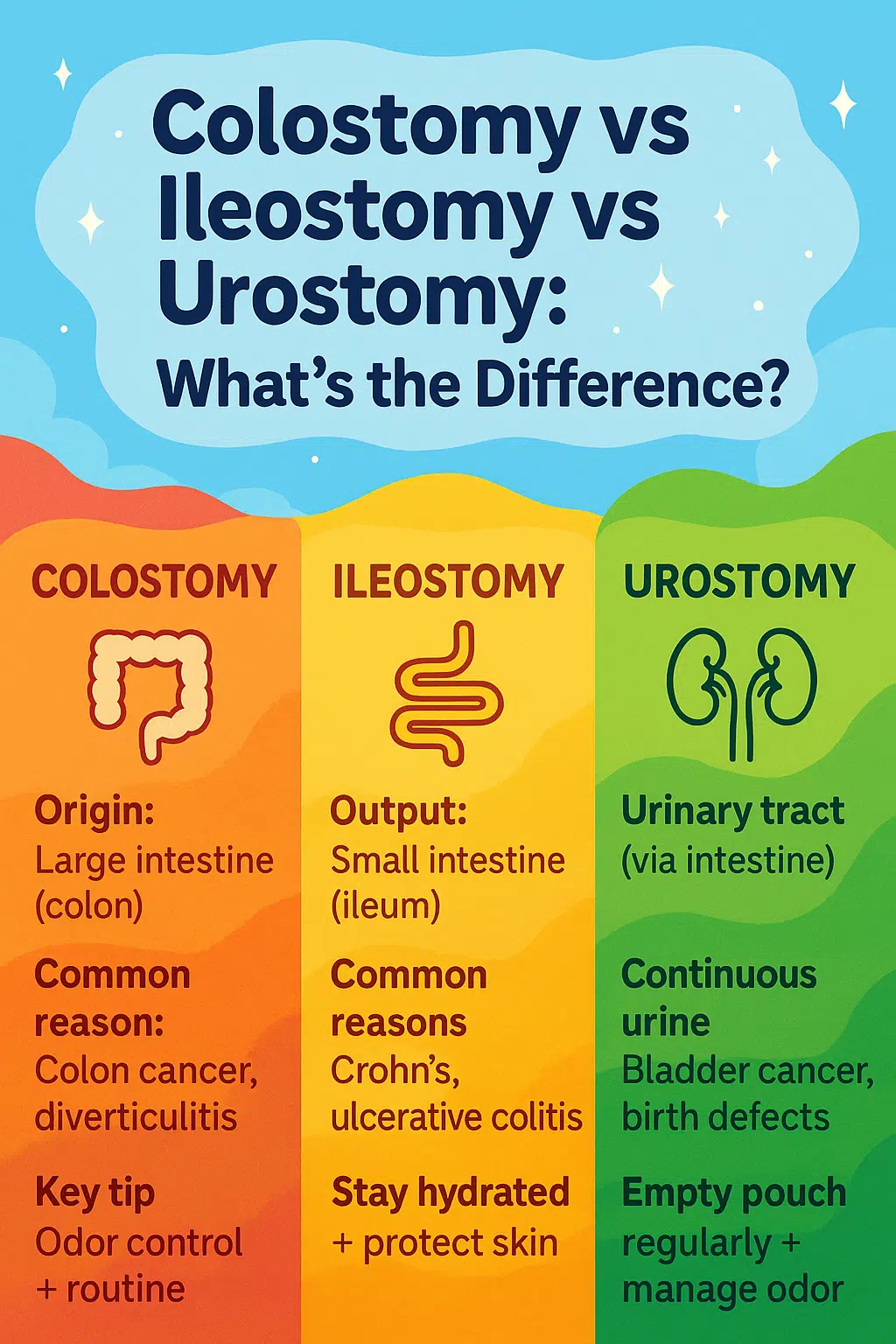
Understanding the Difference: Colostomy vs Ileostomy vs Urostomy
Introduction
Facing ostomy surgery can feel overwhelming, especially when you’re suddenly confronted with unfamiliar medical terms. Words like colostomy, ileostomy, and urostomy may all sound alike, but they describe very different procedures. Understanding the type of ostomy you (or your loved one) has can make managing care simpler and less stressful. This guide explains the differences in plain language, so you can feel informed and confident moving forward.
What Is an Ostomy?
An ostomy is a surgically created opening in the body that allows waste to leave when the usual pathway is no longer possible. The opening, called a stoma, connects to an external pouch or liner that collects waste. Ostomies can be temporary or permanent, depending on the medical condition.
The three main types are:
- Colostomy – for stool that exits from the colon.
- Ileostomy – for stool that exits from the small intestine.
- Urostomy – for urine when the bladder no longer works or has been removed.
Colostomy: Connecting to the Colon
A colostomy diverts stool through an opening in the colon (large intestine).
- Why it’s needed: Conditions such as colon cancer, diverticulitis, injury, or blockage may require bypassing part of the colon.
- Output: Stool is often more formed and less frequent compared to other ostomy types.
- Daily life: Many people with colostomies find routines manageable with ostomy liners, pouch covers, and dietary awareness.
Ileostomy: From the Small Intestine
An ileostomy is an opening made in the ileum, the last section of the small intestine.
- Why it’s needed: Crohn’s disease, ulcerative colitis, familial polyposis, or bowel injuries are common reasons.
- Output: Stool is usually more liquid and passed more frequently, since the colon (which absorbs water) is bypassed.
- Daily life: Because of the higher output, skin care and hydration are especially important. Products like biodegradable ostomy liners can help reduce mess and make pouch management easier.
Urostomy: Redirecting Urine
A urostomy reroutes urine away from a non-functioning or removed bladder. Surgeons often use a piece of intestine to create a new urinary pathway.
- Why it’s needed: Bladder cancer, birth defects, or severe bladder damage.
- Output: Continuous urine flow, collected in a pouch.
- Daily life: Because output is constant, emptying and maintaining the pouch regularly is key. Using liners can improve cleanliness and reduce odor.
Key Differences at a Glance
| Type | Origin | Output Consistency | Common Reasons | Special Considerations |
| Colostomy | Colon | Formed/soft stool | Colon cancer, diverticulitis | Regular bowel habits, odor control |
| Ileostomy | Small intestine | Liquid/frequent stool | Crohn’s, ulcerative colitis | Skin care, hydration |
| Urostomy | Urinary tract (via intestine) | Continuous urine | Bladder cancer, birth defects | Frequent emptying, odor control |
Living Well with Any Ostomy
No matter the type, an ostomy does not define your life. With the right ostomy supplies and knowledge, you can regain independence, confidence, and freedom. Many ostomates travel, exercise, work, and socialize fully after surgery.
Tips for managing daily life:
- Use biodegradable ostomy liners for cleaner, eco-friendly pouch changes.
- Keep extra supplies on hand, especially when leaving home.
- Stay mindful of diet and hydration (especially with ileostomy).
- Don’t hesitate to lean on support groups, online communities, or your care team.
Conclusion
Colostomy, ileostomy, and urostomy surgeries may sound similar, but they each serve unique purposes. Knowing the differences helps you understand your body better, manage care more effectively, and choose the right products, like biodegradable ostomy liners, to make life easier. With preparation and support, life after an ostomy can still be full, active, and meaningful.